
The short answer
An accent wall puts wallpaper on one chosen wall, usually behind a bed, sofa, desk or dining table. In Pembroke Pines we help pick the wall and the paper, prep the surface, and hang it with straight seams and a centered pattern.
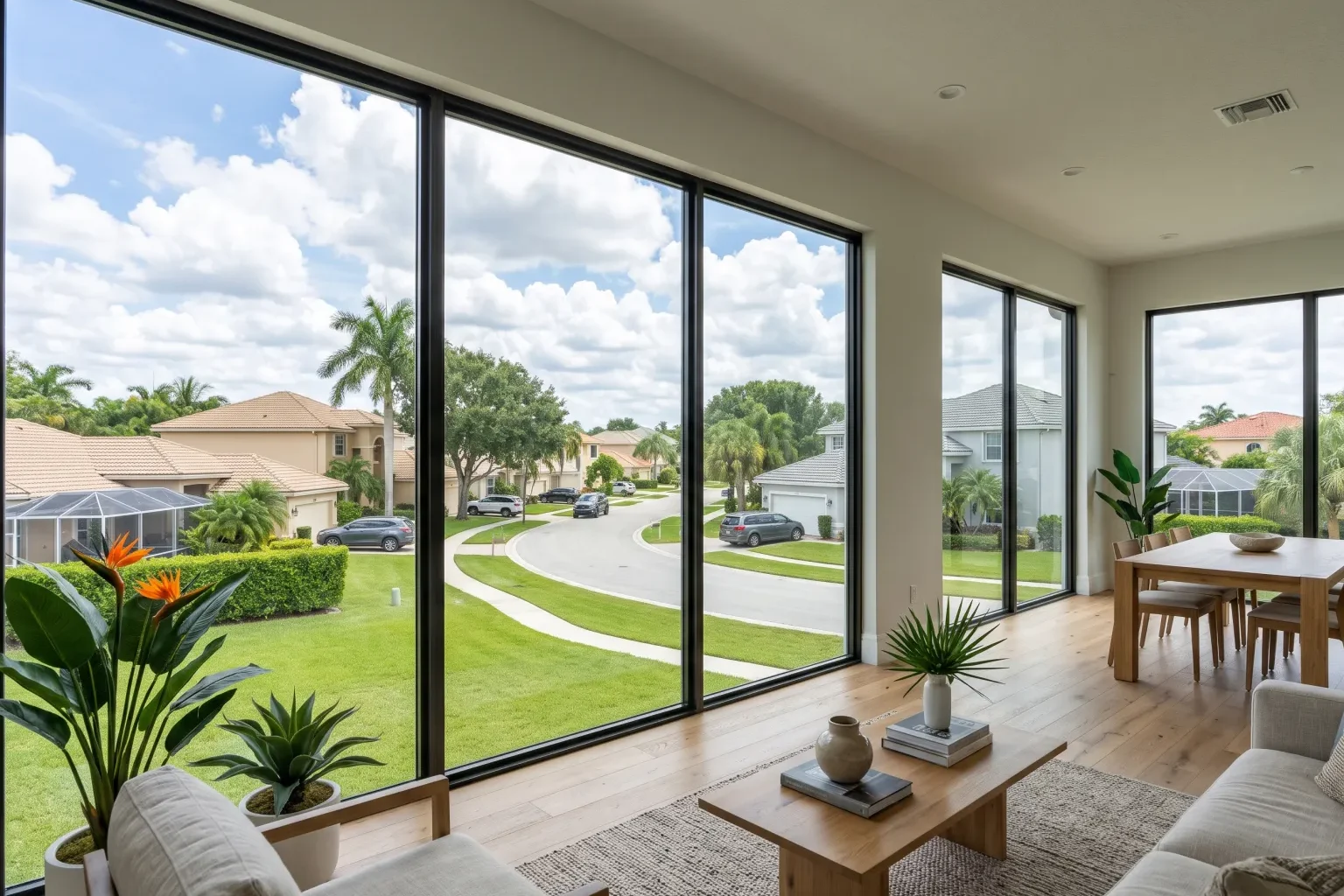
Pembroke Pines is a large, mostly residential city in southwest Broward County, and its neighborhoods include planned communities, townhomes and plenty of single-family houses with open great rooms. Those wide, light-colored interiors are a natural canvas for a single papered feature wall. We travel about eight miles northwest from our Miami Gardens base to homes in the 33024, 33026 and 33028 ZIP codes, helping owners add personality to one wall without committing an entire room to pattern. It is a focused project with a big visual payoff, and it is one of the easiest ways to test how you feel about wallpaper in your home.
Where a feature wall works in open floor plans
Large great rooms can feel like one long, beige stretch from the front door to the sliding doors at the back. A papered wall gives that space an anchor. Common choices include the wall behind the TV, the end wall of a dining area or a short wall that separates the kitchen from the living room. In bedrooms, the headboard wall is the classic spot because the bed frames the paper and it is the first thing you see when you walk in.
Stairwells in two-story townhomes also make striking accent walls. The tall surface shows off a large pattern repeat that would feel overwhelming in a smaller room.
- Headboard walls in primary and guest bedrooms
- TV or fireplace walls in great rooms
- Dining area end walls
- Stair walls in two-story homes
- Home office walls behind the desk for video calls
Choosing a paper you will still like next year
Accent walls tempt people toward the boldest sample in the book, and sometimes that is exactly right. Still, it helps to tape a large sample on the wall for a few days and look at it in morning light, afternoon glare and lamp light at night. South Florida sun is intense, and a metallic or high-gloss paper can look very different at noon than it did in the showroom.
Texture is another route. A subtle linen look, a faux plaster or a soft geometric gives depth without competing with artwork and furniture. Those options also age well if you change your decor later.
Surface prep for newer and older homes
Many homes in Pembroke Pines have drywall interiors with a light orange-peel or knockdown texture. Texture can show through thin papers, so we may skim the wall smooth before hanging. Older concrete block homes may have plaster walls with small cracks or patched areas, which we fill, sand and prime.
Every accent wall gets a wallcovering primer. It helps the paste bond evenly, gives us working time to slide strips into place and protects the wall so future removal is much easier.
Centering the pattern and finishing the edges
On a single wall, everything is on display. We measure the wall and plan the layout so the pattern is balanced from left to right, with matching partial motifs at each corner rather than a full motif on one side and a sliver on the other. When a window or a niche sits on the wall, we plan around it so the design lines up above and below.
Where the accent wall meets painted walls, we trim the paper to a crisp line in the corner. If the adjacent walls are getting new paint, we suggest painting first so the paper edge stays clean.
Keeping the wall looking sharp
Air conditioning runs most of the year here, and humid summer air sneaks in each time a door opens. Keeping the thermostat steady helps paper stay flat. Most modern accent papers can be dusted or wiped with a barely damp cloth, though you should check the label. Avoid hanging heavy shelves on the paper until the adhesive has had time to cure fully.
Kids and pets are hard on walls, so in family rooms and playrooms a scrubbable vinyl or a vinyl-coated paper is a practical choice. Fingerprints and the occasional crayon mark wipe away without lifting the ink. If your accent wall sits next to a sliding door that opens onto a pool deck, a washable surface also handles the splashes and damp towels that tend to end up there.
Should you decide to change the look in a few years, a properly primed wall means the paper comes down with far less effort. Non-woven papers in particular can often be pulled off dry in full strips, leaving the wall ready for the next idea, whether that is a fresh pattern or simply paint.
More services in Pembroke Pines
- Wallpaper Installation in Pembroke Pines
- Wallpaper Removal in Pembroke Pines
- Mural Installation in Pembroke Pines
- Grasscloth Wallpaper Installation in Pembroke Pines